Adventures In Chandlery
As an Amazon associate, I may earn a small commission if you navigate to Amazon from my site and buy something. This will not result in an extra cost to you.
As with many surnames derived from traditional occupations (Smith, Cooper, Baker, Taylor), Chandler originated with those who made candles. Therefore, chandlery would be either the making of candles or a store which sold candles and other general goods. Chandelier also derives from this base, as the original fixtures held a multitude of candles above an open space. See? You learn so much on this blog. You’re welcome.
All of this is a long way of saying I’ve been playing with candles recently. I don’t really care for the more traditional way of making candles…melting wax, pouring it into a mould or its final container, and suspending a wick in the molten wax until it hardens into place. It’s messy, and requires a number of containers dedicated to only wax-making. You wouldn’t want to try to make macaroni and cheese in the pan you just used to melt a bunch of wax.
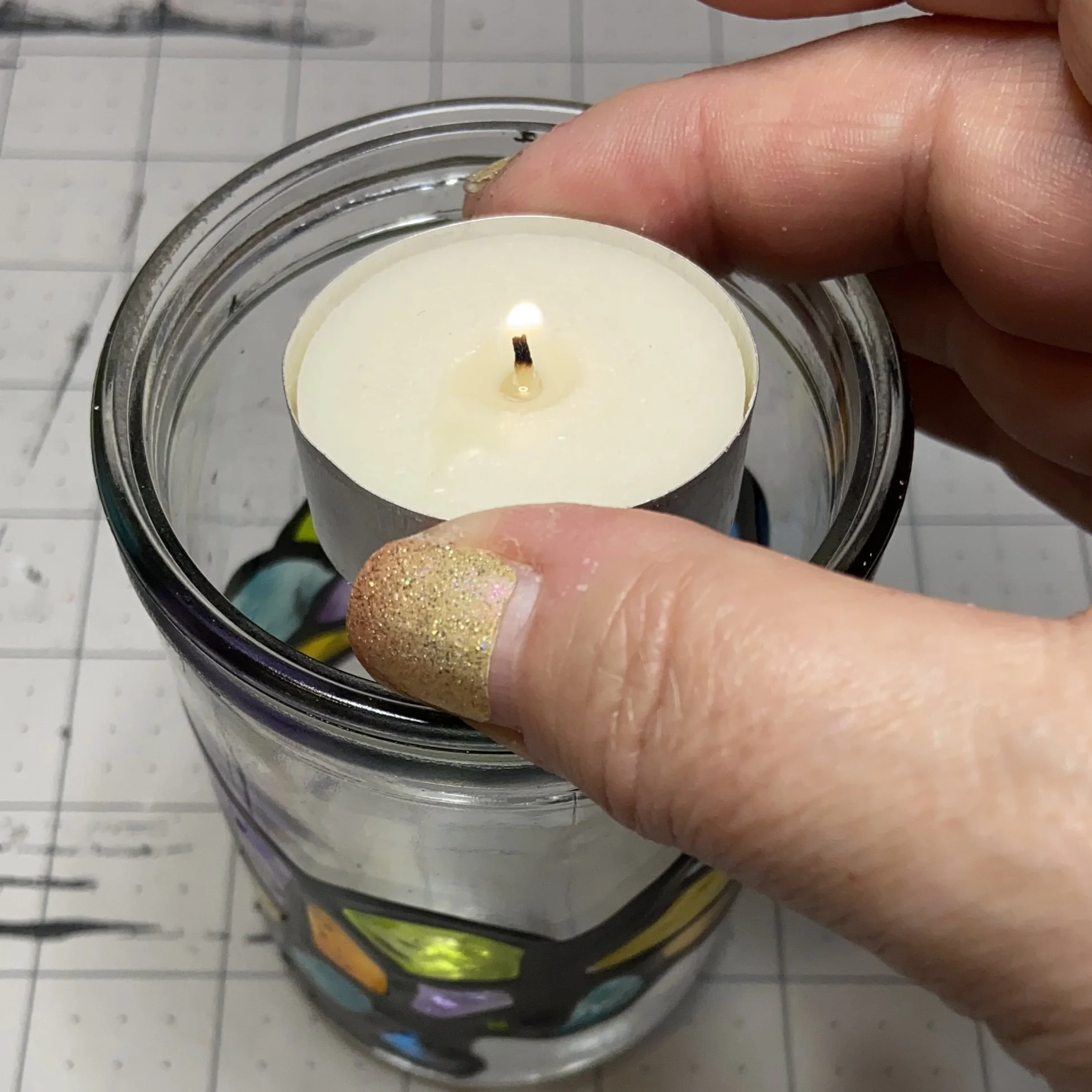
But in addition to supplying lovely ambiance, candles are very useful in a power outage, which is not uncommon in the winter out here in the sticks. I have a number of commercial candles that I’ve acquired over the years, but I’ve come to value tea light candles nestled in larger containers. They are quite portable, give a decent amount of light, and the fact that they are contained first in their metal base and then again in a glass container makes them safer, in my opinion. And you can get about a million tea lights for $10 off Amazon. Okay, yes, that was an exaggeration, but they are extremely affordable.
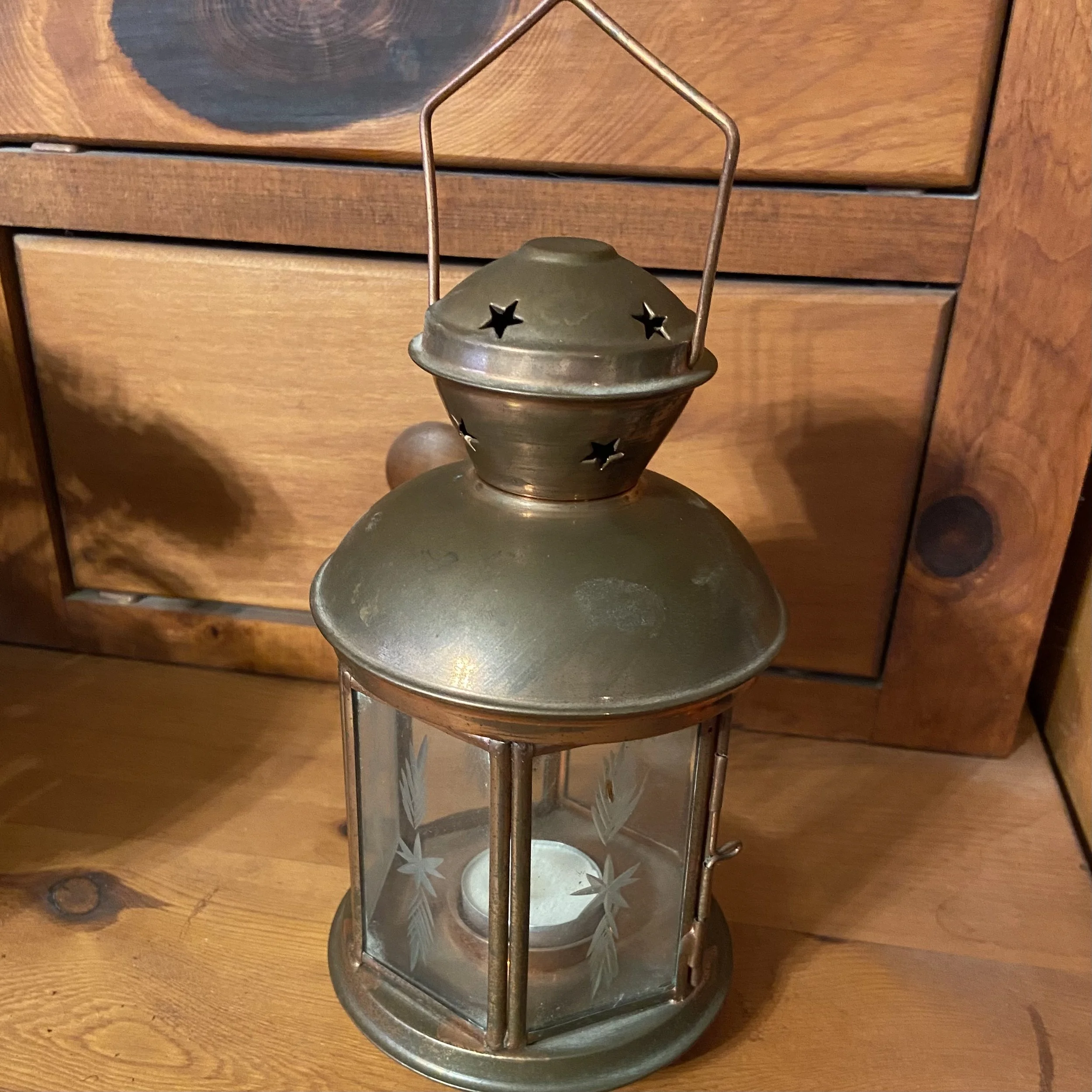
I got this copper lantern that holds a tea light many years ago, and I cannot for the life of me remember where I found it. But it’s so very pretty and really does a very nice job of providing portable illumination. I have a number of oil hurricane lamps, of course, and they also do a lovely job. But you can never really have too many glass containers for tea lights in a power outage.
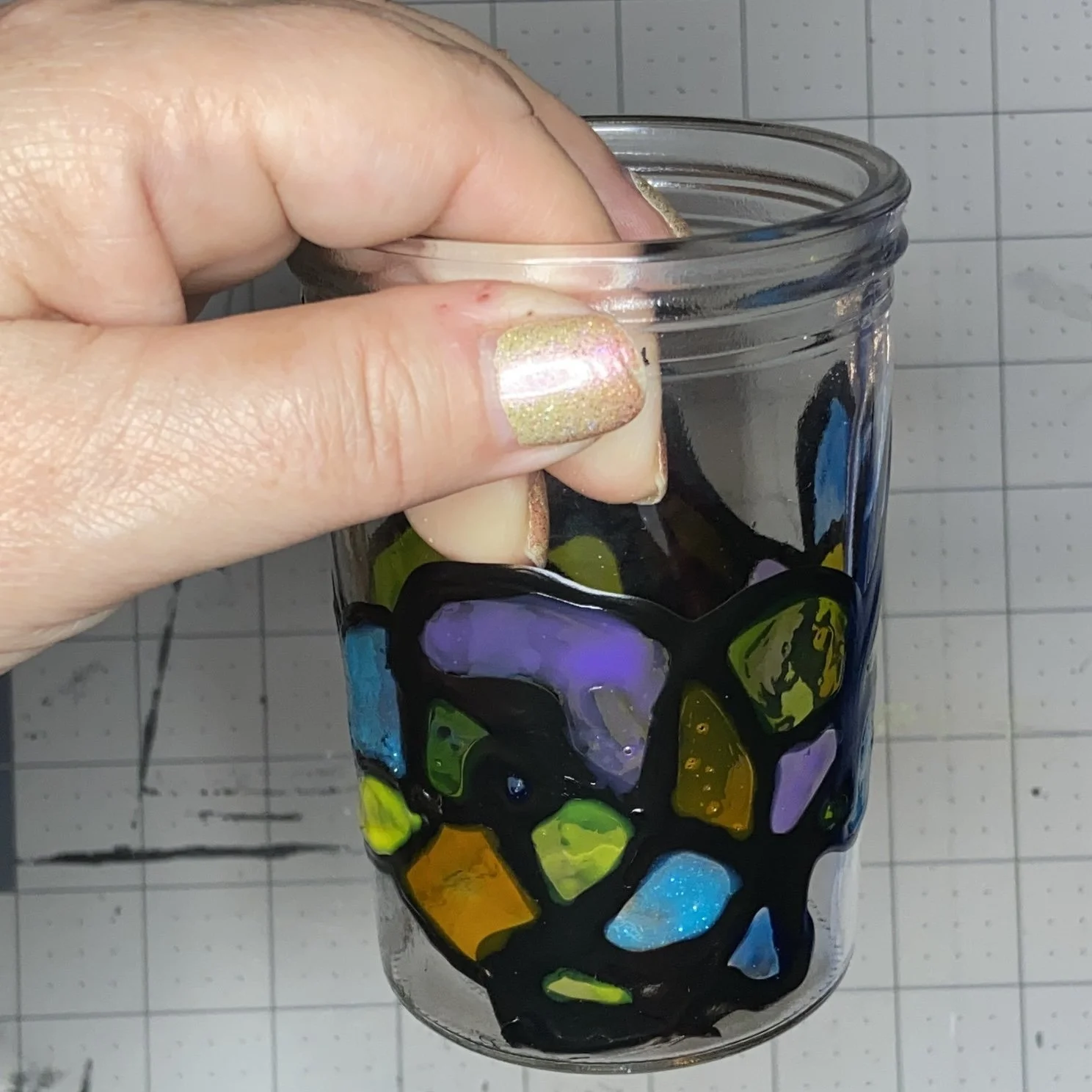
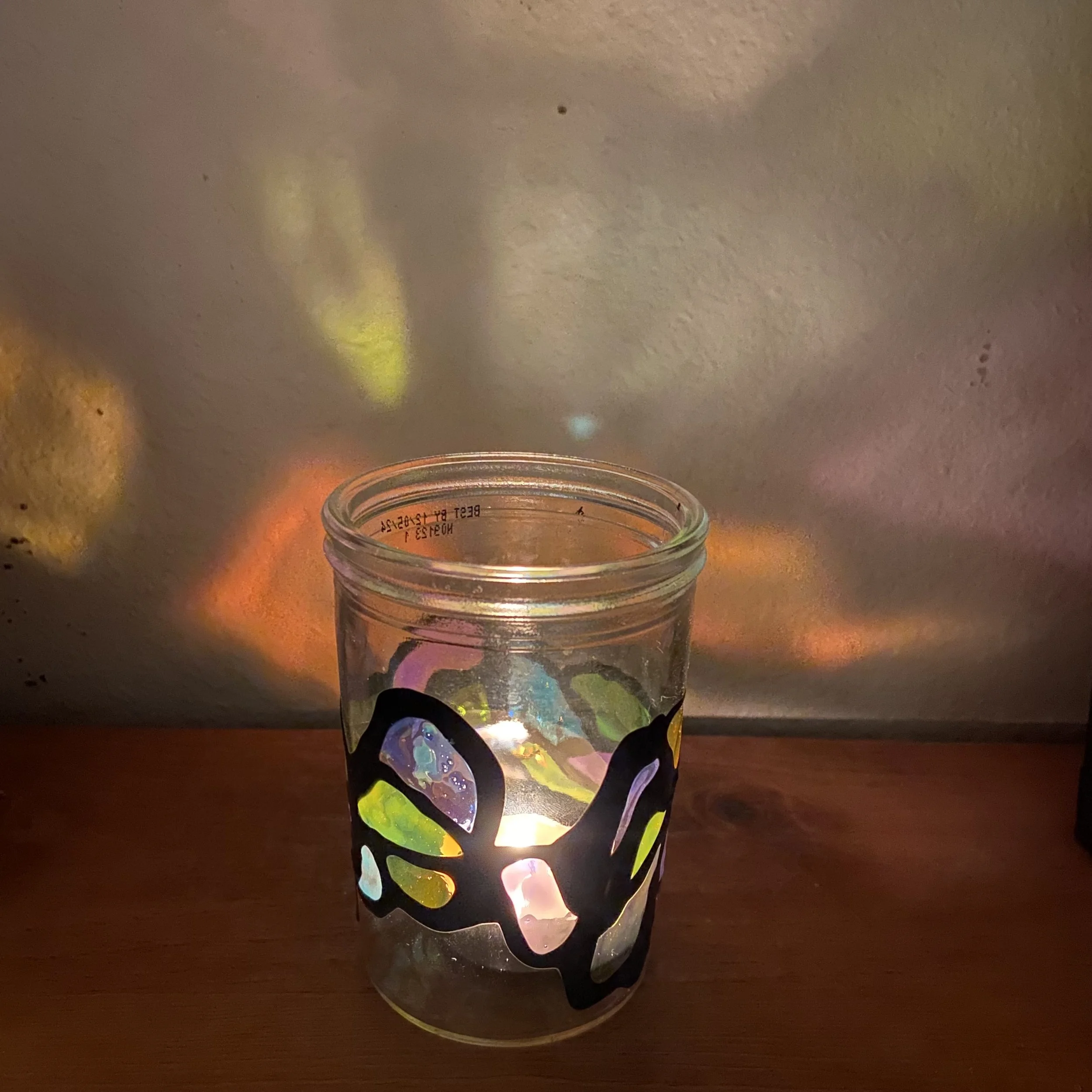
With that in mind, I grabbed a glass jar with straight sides (at one time, it held chipped beef) and decided to play around with my Gallery Glass paints, left over from my experiments in making faux stained glass. I first used puffy black fabric paint to make a random squiggly design and let that dry. Then I used various paint colors to fill in the spaces I’d just created, and let that dry as well. For an exercise in just messing around with paint, I thought it turned out surprisingly pretty. And once a lit tea lamp is dropped inside it, it’s quite lovely.
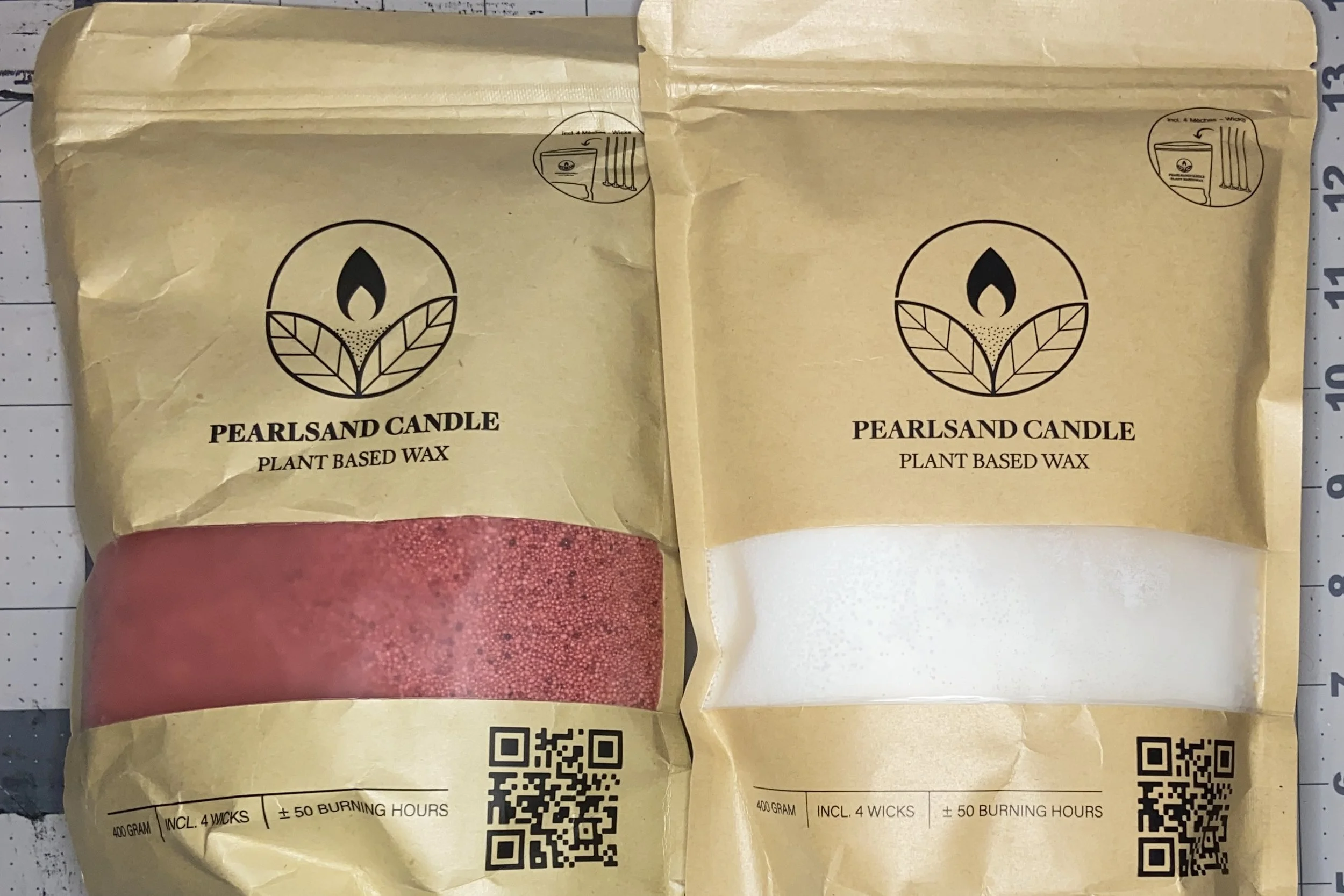
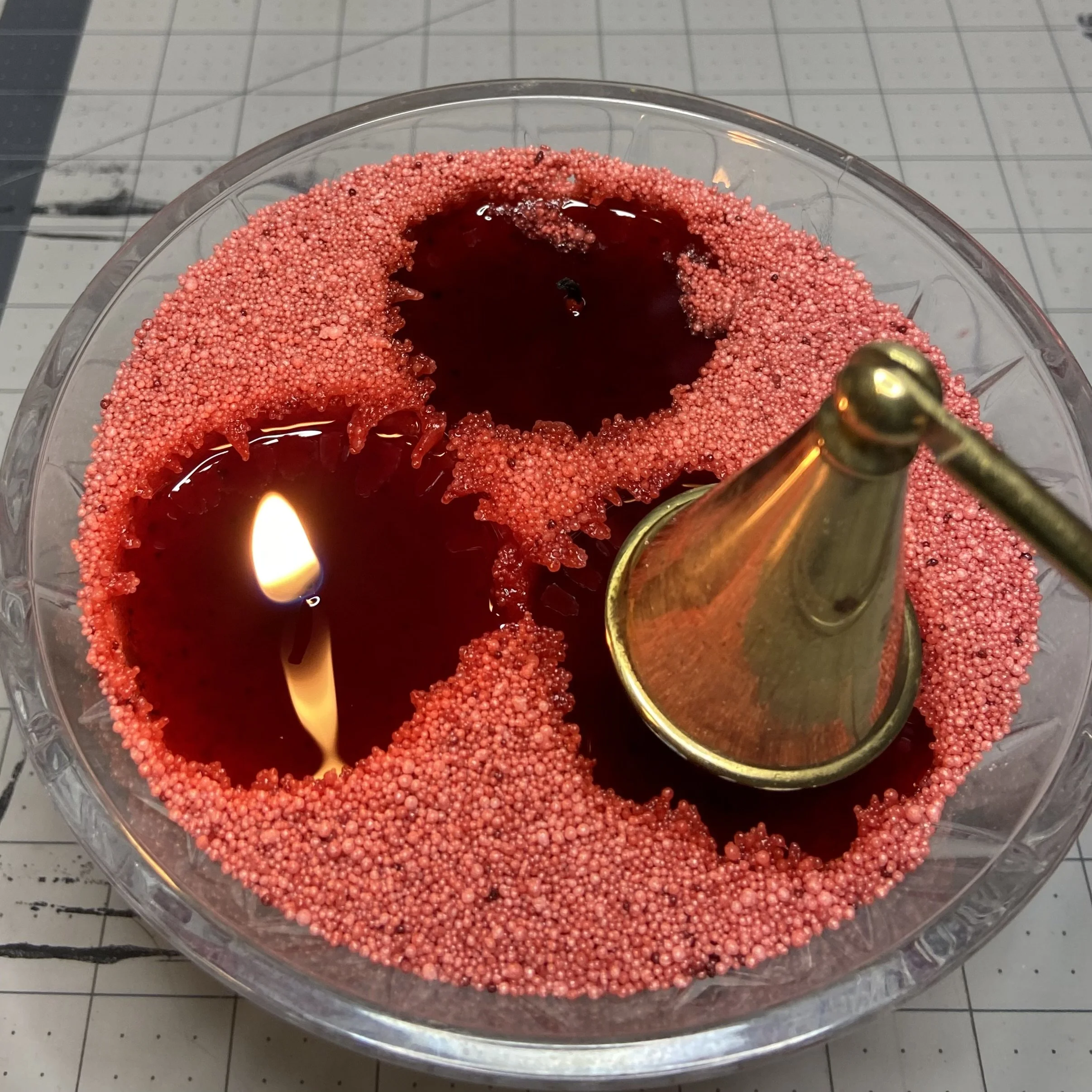
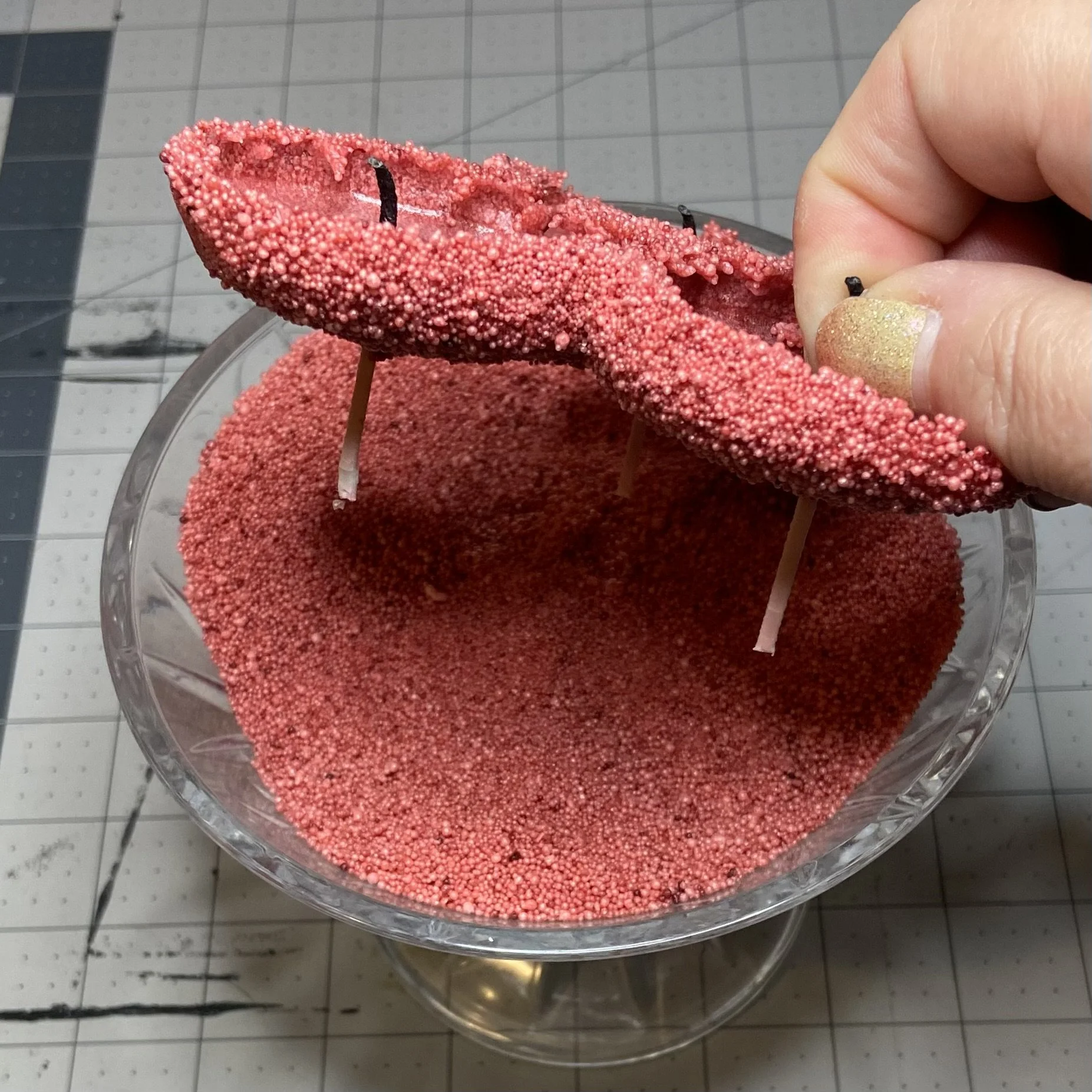
And then there is candle sand. It’s got many names, but what it boils down to is granulated wax, mostly plant-based. I’d never even heard of such a thing until I happened across it on YouTube a few weeks ago. You pour the sand into a fire-safe container (glass or clay or ceramic, etc), stick a wick into it, and then light it. Let it burn until you’re done with it, and then extinguish it (use a candle snuffer; you don’t want to blow unmelted wax granules all over the place) and let it cool. Once the wax has hardened, lift out the melted wax along with the wick and discard both. Smooth over your candle sand, add a little more if necessary, stick in a new wick, and you’re ready for your next candle adventure.
If you are adventuresome, you might try layering different colors of candle sand in a clear glass container. That’s quite pretty but remember that, like sand, the candle granules can (and will) shift as you move or tilt the container, so your carefully arranged layers can easily blur together.
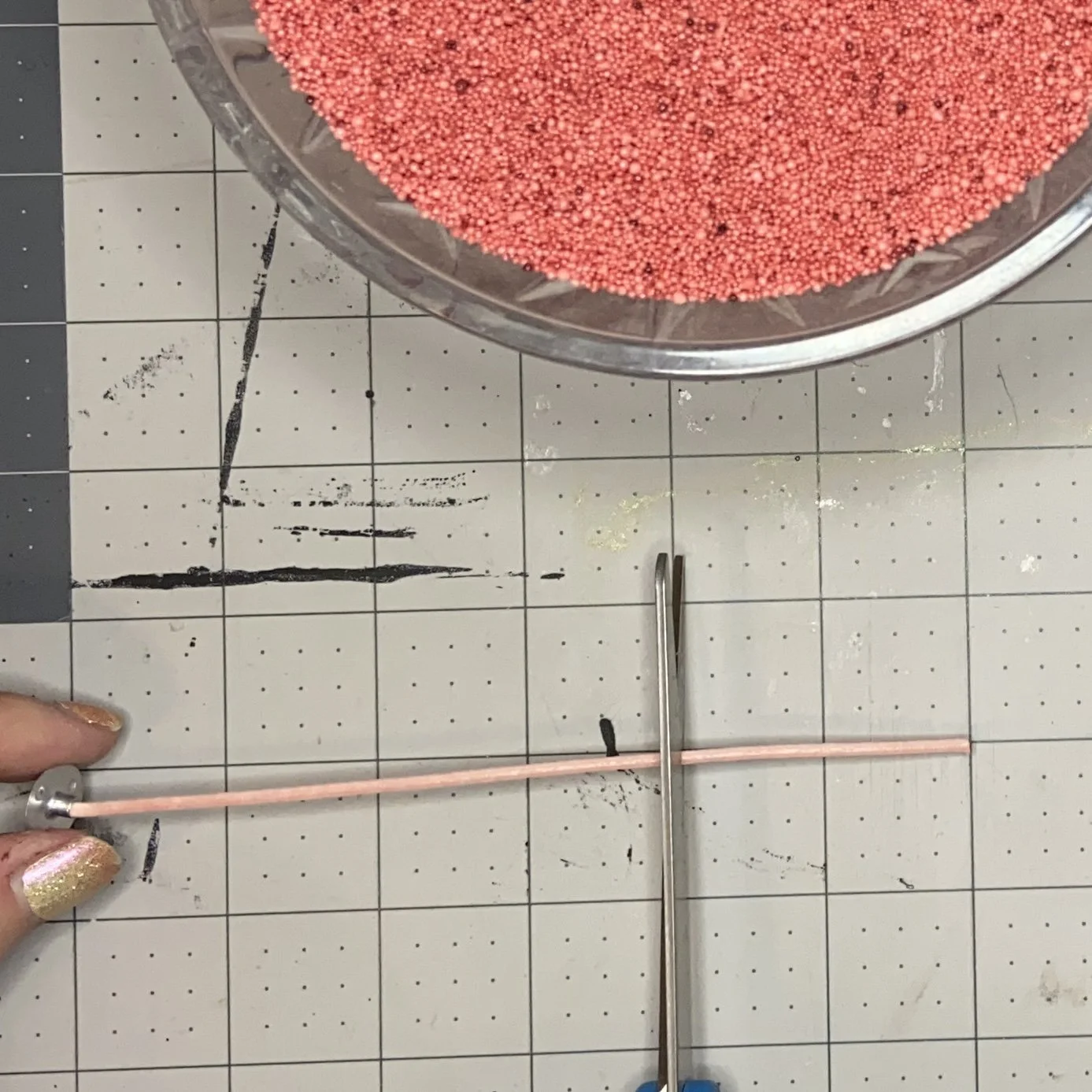
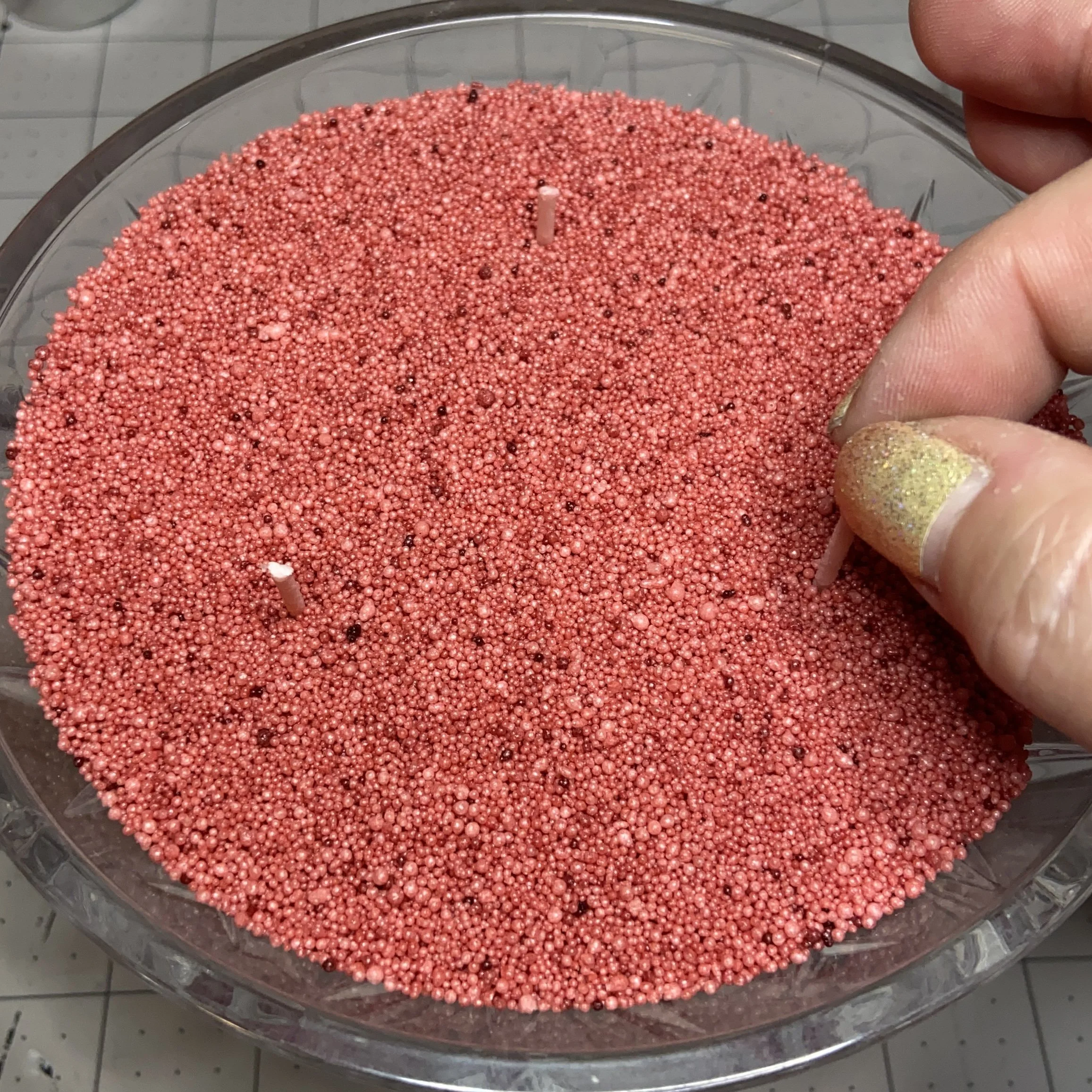
When playing with the candle sand, I grabbed a cut glass bowl that had been holding my favorite agates, temporarily evicted the pretty rocks, and poured in the candle sand. I cut one of the wicks included with the wax into three 2” pieces, took off the metal end, and stuck the three wicks into the candle sand. Then I used my fancy electric lighter to light all three wicks and set the candle in a (relatively) dark place to admire it. It gave as much light as any 3-wick candle would.
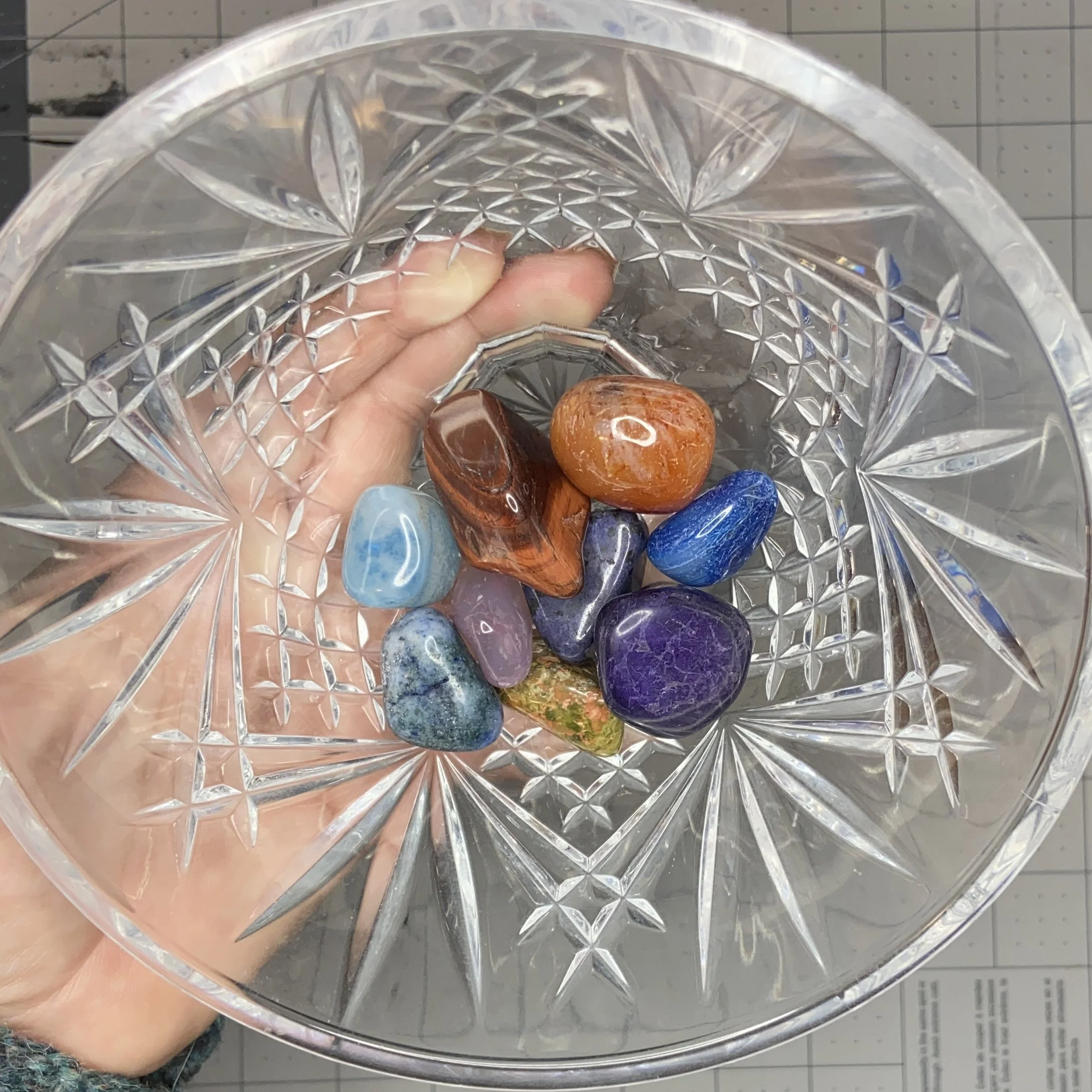
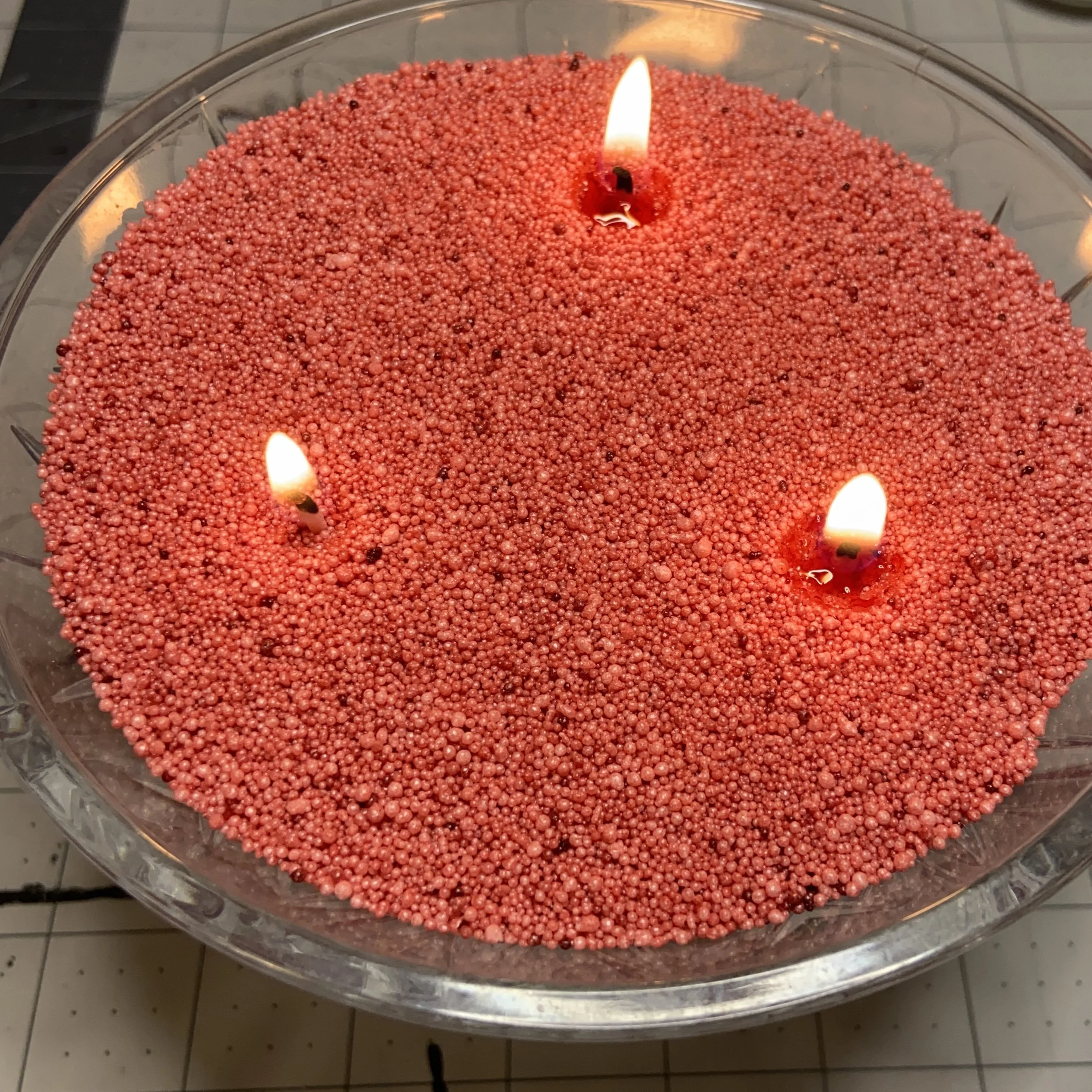
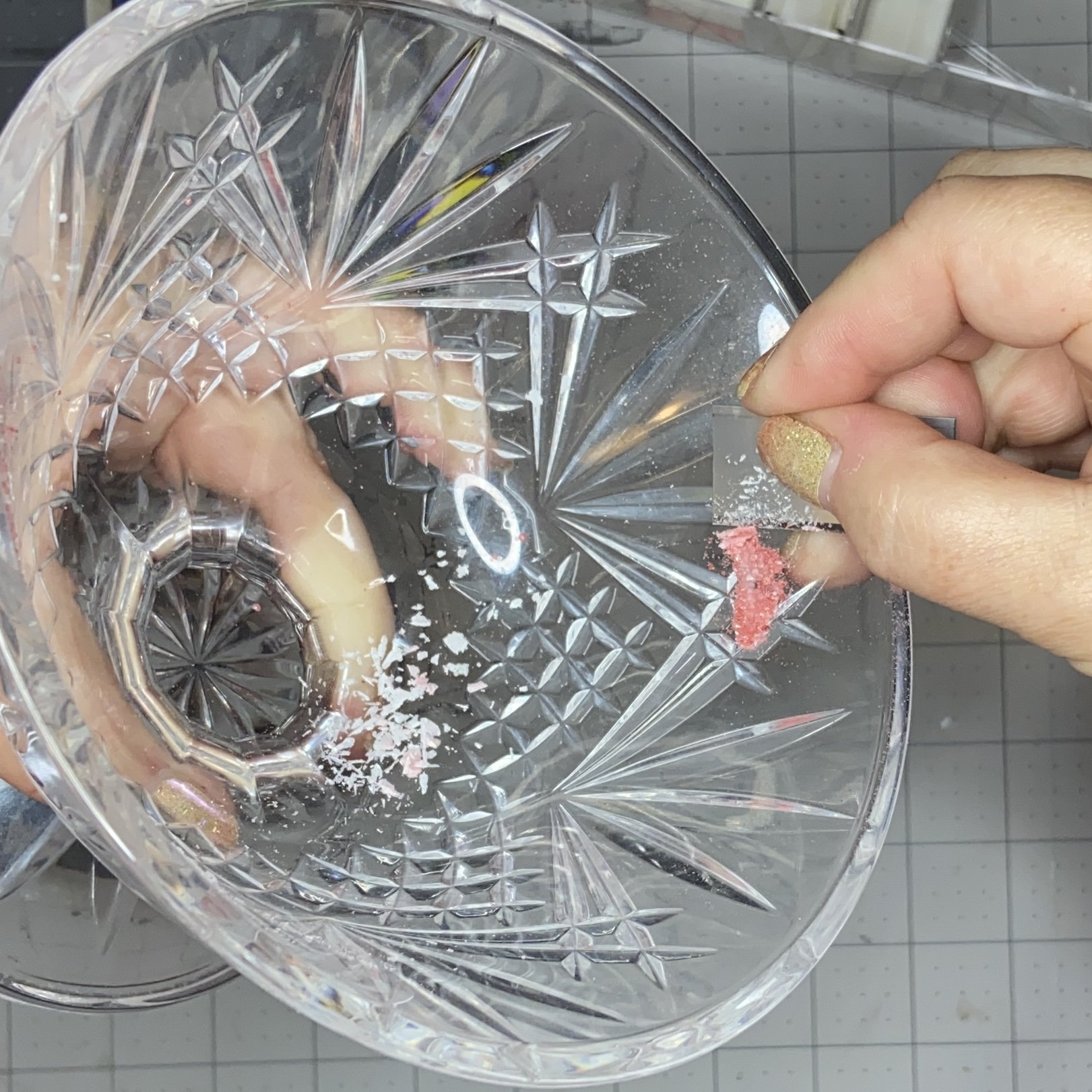
I let it burn for an hour, then used the snuffer, and let the wax harden. The pool of wax and the three wicks easily lifted out together. You’d think that a lot of wax is wasted when you do this, but it’s a surprisingly small amount that gets discarded. I will say that if I’d just used one wick in the center of the candle, no melted wax would have touched the glass and adhered. As it was, the tiny amount of wax that melted to the glass was easily scraped off with a razor blade, and after I poured the remaining candle sand back into its bag, I was able to put my agates back in their rightful place.
Safety notes: If you tip over a regular candle, it usually spills molten wax everywhere and continues to burn, which is of course a really good way to set your house on fire. By contrast, the candle sand candles extinguish instantly if they are spilled or knocked over. Another point: you can buy scented candle sand, if you wish. But it’s unwise to add something like essential oil to a candle sand candle. Much of that stuff is a bit volatile, so if you really must have a scented candle, either buy the candle sand with the scent already in it, or add some kind of scent product that is specifically for candle making.
As the holidays approach and people wrack their brains for Christmas gift ideas, might I point out that you can always find any number of very cheap pretty glass or ceramic containers at places like Goodwill. Combine one of those with a bag of candle sand, and you have a nice and also unusual gift.